How Singapore Has Become a Leading Tech Hub in Asia
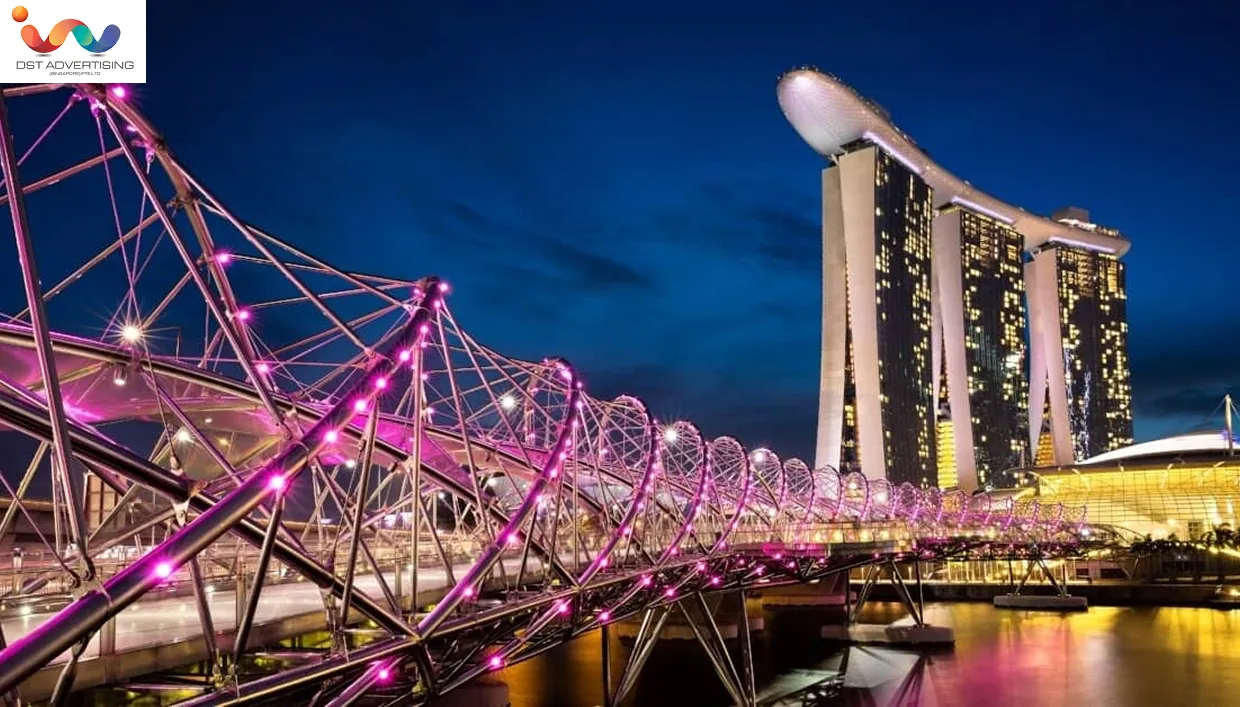
Singapore is widely recognised as one of Asia's leading technology and innovation hubs. Despite its small geographical size, the city-state has built a technology ecosystem that attracts global companies, startups, investors, researchers, and highly skilled professionals.
From artificial intelligence and fintech to cloud computing, cybersecurity, biotechnology, and smart-city technologies, Singapore has positioned digital innovation as an important part of its economic strategy.
The country's digital economy reached S$128.1 billion in 2024, equivalent to 18.6% of Singapore's GDP, up from 14.9% in 2019. The digital economy has also expanded beyond the technology sector, with industries such as finance, wholesale trade, and manufacturing increasingly contributing to digital growth.
But how did Singapore become such an important technology hub in Asia?
1. Strong Government Support for Technology
One of the biggest factors behind Singapore’s technology ecosystem is long-term government support.
Singapore has consistently treated technology, research, innovation, and digitalisation as strategic priorities rather than short-term trends.
Government agencies such as the Infocomm Media Development Authority (IMDA), Enterprise Singapore, Economic Development Board (EDB), National Research Foundation (NRF), and GovTech Singapore play different roles in supporting digital transformation, innovation, investment, research, and technology adoption.
Programmes such as Smart Nation and Startup SG have also contributed to Singapore’s technology ecosystem by supporting digital infrastructure, startups, innovation, and technology adoption.
This creates an environment where government policy and technology development can work together.
2. Singapore Has Built Strong Digital Infrastructure
A technology hub needs reliable infrastructure.
Singapore has invested heavily in broadband networks, mobile connectivity, cloud infrastructure, data centres, and digital government systems.
The country’s connectivity infrastructure is one of the reasons global technology companies consider Singapore an attractive location for regional operations.
Singapore has also achieved extensive 5G coverage and developed a substantial data-centre ecosystem. EDB currently describes Singapore as a leading Asian location for ICT infrastructure and notes that it hosts a significant share of Southeast Asia’s data-centre load.
Reliable infrastructure gives businesses the foundation they need to develop and operate digital products at scale.
3. Singapore Is a Gateway to the ASEAN Market
Singapore’s geographical location is another important advantage.
The city-state sits at the centre of Southeast Asia and provides businesses with access to the wider ASEAN region.
ASEAN represents a market of hundreds of millions of people, while Singapore itself provides a highly connected business environment for companies looking to expand across Asia.
For technology companies, Singapore can therefore serve as a regional base for:
- Product development
- Regional headquarters
- Sales
- Research and development
- Investment
- Customer support
- Business partnerships
Its connectivity, trade relationships, financial infrastructure, and business environment have helped make it an attractive launchpad for regional expansion.
4. A Strong Startup Ecosystem
Singapore has developed a substantial startup ecosystem covering areas such as:
- Fintech
- Artificial intelligence
- E-commerce
- SaaS
- Cybersecurity
- Healthtech
- Logistics technology
- Climate technology
- Deep technology
GovTech reported in 2025 that Singapore had more than 20 active unicorns and ranked second in Asia and ninth globally in Startup Genome’s 2025 ecosystem ranking.
The startup ecosystem benefits from the presence of investors, accelerators, universities, multinational corporations, government programmes, and technology communities.
This creates opportunities for startups to access funding, talent, customers, partnerships, and international markets.
5. Access to Venture Capital
Technology startups need more than ideas. They need capital to build products, hire employees, enter new markets, and scale.
Singapore has developed a significant venture-capital ecosystem.
According to GovTech, Singapore captured nearly 60% of Southeast Asia’s venture funding deal volume in 2024, with more than S$6.7 billion in funding value.
The presence of international and regional investors gives technology startups opportunities to raise capital while remaining connected to Southeast Asian markets.
This is particularly important for startups working in capital-intensive fields such as AI, fintech, biotechnology, and deep technology.
6. Singapore Is Becoming an AI Hub
Artificial intelligence has become one of Singapore’s major technology priorities.
The country launched its first National AI Strategy in 2019 and subsequently introduced National AI Strategy 2.0, focusing on developing AI capabilities and using AI for public benefit.
Singapore is also investing heavily in AI research.
In January 2026, the government announced more than S$1 billion over five years from 2025 to 2030 under the National AI Research and Development Plan. The investment focuses on fundamental AI research, applied AI research, and talent development.
The country’s AI ecosystem also includes research institutions, startups, technology companies, universities, and multinational corporations.
According to Singapore EDB, more than 4,500 tech startups operate in Singapore and more than 50 AI Centres of Excellence had been established following the launch of National AI Strategy 2.0.
7. Global Technology Companies Choose Singapore
Another indication of Singapore’s technology ecosystem is the presence of major international companies.
Global technology companies and multinational corporations have established regional headquarters, research centres, innovation hubs, and AI operations in Singapore.
EDB reported in 2026 that 80 of the world’s top 100 technology companies have a presence in Singapore.
Companies such as Microsoft and other global technology firms have also expanded research and AI activities in the country.
OpenAI established its Singapore regional hub in 2024, while Microsoft opened an AI research lab in Singapore in 2025.
The presence of global companies can create a network effect: international businesses bring investment and expertise, while local startups gain access to potential customers, partners, employees, and knowledge networks.
8. Strong Universities and Research Institutions
A sustainable technology ecosystem requires more than companies and investors.
It also needs research and talent.
Singapore’s universities and research institutions contribute to areas such as:
- Artificial intelligence
- Computer science
- Engineering
- Biotechnology
- Data science
- Robotics
- Advanced manufacturing
- Sustainability
The National Research Foundation has supported long-term research and innovation through Singapore’s Research, Innovation and Enterprise plans.
The RIE2025 programme allocated S$25 billion to research, innovation, and enterprise activities, while the new RIE2030 plan continues Singapore’s focus on research capabilities and technological competitiveness.
This long-term approach helps connect academic research with commercial innovation.
9. A Highly Skilled Technology Workforce
Technology infrastructure and investment are only useful when businesses can access the right talent.
Singapore has developed a substantial technology workforce covering areas such as:
- Software engineering
- Data science
- Artificial intelligence
- Cybersecurity
- Cloud computing
- Digital product development
- Financial technology
IMDA reported that Singapore’s tech workforce increased from 208,300 in 2023 to 214,000 in 2024. AI and data, as well as cybersecurity, were among the fastest-growing areas.
The country is also investing in AI education and training to expand the talent pipeline.
Singapore has stated an objective of developing 15,000 skilled AI professionals by 2029.
10. Digital Government Has Created a Technology-Friendly Environment
Singapore has also used technology extensively within government services.
Services such as Singpass have made digital identity and online government transactions part of everyday life.
The Smart Nation initiative has supported the development of digital government services, cashless payments, digital identity, data infrastructure, and smart-city technologies.
Smart Nation 2.0 builds on this foundation around three broad pillars:
The objective is to create digital systems that are useful, secure, inclusive, and resilient.
Government adoption can also create a technology environment where companies develop solutions for real-world applications.
11. Singapore Has a Business-Friendly Environment
Technology companies need an environment where they can establish operations, access markets, raise capital, hire employees, and protect intellectual property.
Singapore has developed policies intended to support businesses, investment, innovation, and intellectual property.
The country also has a relatively predictable regulatory environment, strong financial infrastructure, and extensive international connectivity.
Singapore’s Intellectual Property Strategy 2030 aims to strengthen its position as a global-Asia node for technology, innovation, and enterprise while helping businesses make better use of intangible assets and intellectual property.
This is particularly relevant for technology companies whose most valuable assets may be software, patents, data, brands, algorithms, or other intellectual property.
12. Fintech Has Strengthened Singapore's Technology Ecosystem
Financial technology is another major part of Singapore’s technology landscape.
Singapore is a major international financial centre, creating a natural environment for fintech innovation.
Technology companies can develop products around:
- Digital payments
- Banking
- Wealth management
- Insurtech
- Blockchain
- Digital assets
- Financial compliance
- Financial data
The combination of financial institutions, technology companies, investors, regulators, and a digitally active population creates opportunities for fintech companies to develop and test new solutions.
13. Singapore Is Investing in Green Technology
Singapore’s technology strategy is not limited to software and AI.
The country is also developing technologies related to sustainability and climate resilience.
Areas include:
- Green data centres
- Energy efficiency
- Renewable energy
- Carbon management
- Sustainable buildings
- Smart-city technology
- Low-carbon solutions
The Green Data Centre Roadmap, for example, aims to support more sustainable growth in Singapore’s data-centre industry through greater energy efficiency and the use of green energy.
This creates opportunities for companies developing technology that addresses environmental challenges.
14. Singapore's Digital Economy Is Expanding Beyond Technology Companies
An important reason Singapore’s tech transformation matters is that digitalisation is no longer restricted to technology companies.
IMDA reported that more than two-thirds of Singapore’s digital economy in 2024 came from non-Information & Communications sectors.
Finance and insurance, wholesale trade, and manufacturing were among the major contributors.
This means technology is becoming integrated into traditional industries.
Businesses are adopting:
As a result, Singapore’s technology ecosystem increasingly supports the broader economy rather than operating as a separate sector.
15. SMEs Are Also Participating in Digital Transformation
Technology adoption is not limited to large corporations.
According to IMDA’s Singapore Digital Economy Report 2025, 95.1% of Singapore SMEs had adopted at least one digital area measured by the report in 2024. SMEs also increased their average number of adopted digital areas from 2.0 to 2.3.
This demonstrates how digitalisation is becoming part of everyday business operations.
For SMEs, technology can include relatively practical solutions such as:
- Accounting software
- CRM systems
- Cloud platforms
- E-commerce
- Digital marketing
- Cybersecurity
- ERP systems
- AI tools
- Business analytics
This broad adoption strengthens the country’s overall digital economy.
What Makes Singapore Different From Other Asian Tech Hubs?
Singapore is not the only technology hub in Asia.
Cities such as Bengaluru, Tokyo, Seoul, Shenzhen, Beijing, Shanghai, Hong Kong, and others have substantial technology ecosystems.
Singapore’s model has developed around a particular combination of factors:
Strong infrastructure + government support + international connectivity + capital + research + talent + multinational companies + startup ecosystem
Its relatively small domestic market also encourages businesses based in Singapore to think internationally.
Instead of serving only Singaporean customers, technology companies can use the country as a base for reaching Southeast Asia and other global markets.
The Future of Singapore's Technology Ecosystem
Singapore’s technology strategy is increasingly focused on emerging technologies.
Key areas include:
- Generative AI
- Agentic AI
- Embodied AI
- Quantum computing
- Quantum communications
- Cybersecurity
- Advanced digital infrastructure
- Green technology
IMDA has identified areas such as generative AI, agentic AI, embodied AI, quantum technologies, privacy-enhancing technology, and digital connectivity as areas of future development.
At the same time, Singapore is continuing to invest in AI research, talent development, digital infrastructure, and innovation.
The challenge will be turning these investments into sustainable commercial opportunities while managing issues such as cybersecurity, energy consumption, regulation, talent shortages, and responsible AI adoption.
Final Thoughts
Singapore’s rise as a leading technology hub in Asia did not happen because of one technology or one government programme.
It has been built through decades of investment in infrastructure, research, education, digital government, business development, innovation, and international connectivity.
Today, the country’s technology ecosystem includes thousands of startups, global technology companies, venture investors, research institutions, government agencies, and a growing digital workforce.
Its digital economy reached S$128.1 billion in 2024, representing 18.6% of GDP, while technology adoption continues to spread across traditional industries and SMEs.
Singapore’s next phase is increasingly focused on AI, advanced computing, cybersecurity, green technology, and other emerging technologies.
For businesses looking to expand into Asia, the country’s combination of digital infrastructure, talent, investment, innovation, and regional connectivity continues to make it an important technology and business hub.
The bigger story is that Singapore is not simply building a technology sector.
It is building an economy in which technology is increasingly embedded across business, government, research, and everyday life.