How AI Chatbots Can Reduce Customer Support Costs for Singapore SMEs
Customer support is essential for every business, but it can also become a significant operating expense. For Singapore SMEs, handling customer enquiries across websites, WhatsApp, social media, email, and other channels can require employees to spend hours answering repetitive questions.
This is where AI chatbots for customer support can make a measurable difference.
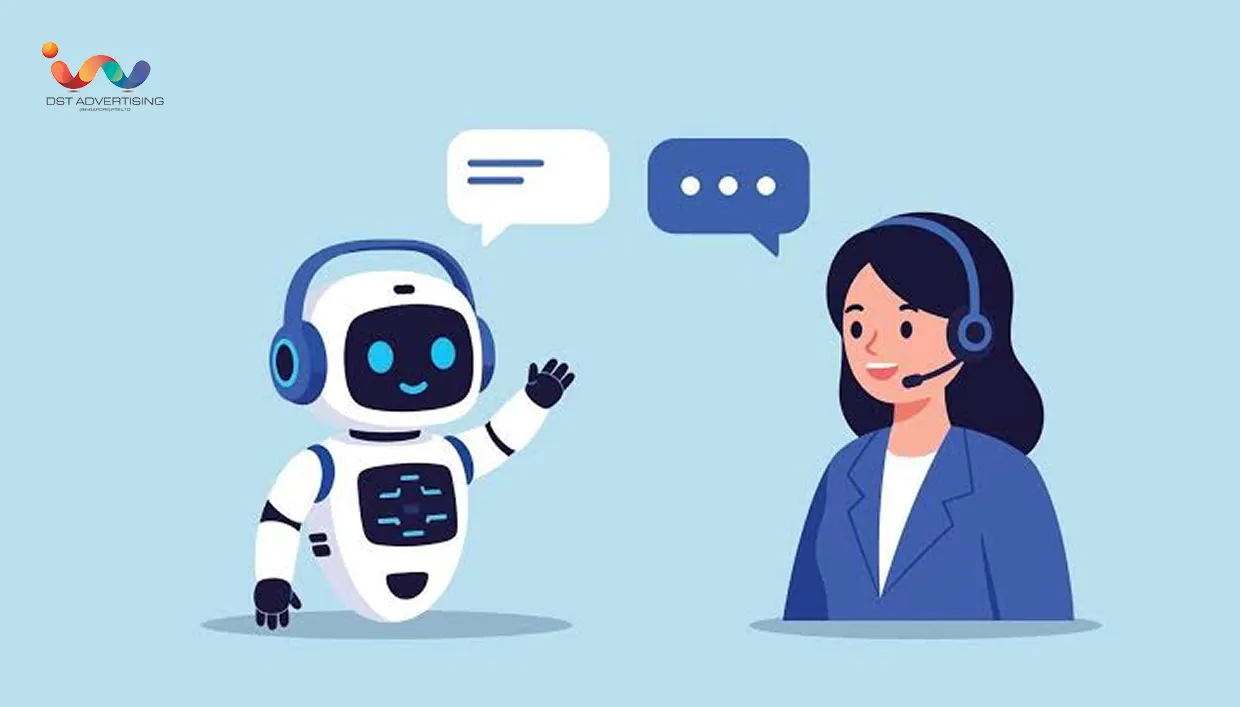
Modern AI chatbots can answer frequently asked questions, provide product information, track orders, collect customer details, handle basic troubleshooting, and escalate complex cases to human agents. Instead of replacing customer service teams entirely, they can automate repetitive interactions and allow employees to focus on higher-value conversations.
The opportunity is becoming increasingly relevant for Singapore SMEs. According to IMDA's Singapore Digital Economy Report 2025, 14.5% of Singapore SMEs adopted AI in 2024, up from 4.2% in 2023. AI adoption was also particularly common in functions such as IT, customer service, and finance and accounting.
So, how exactly can an AI chatbot reduce customer support costs for a Singapore SME?
Let's explore the main ways.
What Is an AI Chatbot for Customer Support?
An AI chatbot is software that uses artificial intelligence and natural language processing to communicate with customers through a digital interface.
Unlike traditional rule-based chatbots that can only respond to predefined commands, modern AI-powered chatbots can understand natural-language questions and use business information to provide relevant responses.
For example, a customer might ask:
“Can I change my delivery address after placing an order?”
Instead of requiring a customer service employee to manually answer the question, an AI chatbot could explain the company’s policy and, if integrated with the relevant system, help the customer initiate the change.
AI chatbots can be deployed on:
- Business websites
- E-commerce stores
- WhatsApp
- Facebook Messenger
- Mobile applications
- Customer portals
- Internal business platforms
IMDA has specifically identified customer support, lead generation, sales assistance, order tracking, and feedback collection as potential chatbot use cases for SMEs.
Why Customer Support Costs Can Become a Problem for Singapore SMEs
For a small business, every employee hour matters.
A growing SME may receive hundreds or thousands of customer enquiries every month. Many of these questions, however, may be repetitive.
Customers may repeatedly ask:
- What are your opening hours?
- Where is my order?
- How much does this product cost?
- Do you deliver to my area?
- What is your return policy?
- How long does delivery take?
- How can I book an appointment?
- What payment methods do you accept?
- Is this product currently available?
- Can I change or cancel my order?
When employees manually answer the same questions again and again, support costs increase without necessarily improving the quality of customer service.
An AI chatbot can automate a large portion of these repetitive interactions.
1. Automate Frequently Asked Questions
One of the simplest ways an AI chatbot can reduce support costs is by answering FAQs automatically.
Instead of a customer service employee repeatedly responding to the same questions, the chatbot can provide instant answers based on an approved knowledge base.
For example, a Singapore restaurant could use a chatbot to answer:
- Opening hours
- Menu questions
- Reservation information
- Delivery areas
- Payment options
- Cancellation policies
- Location details
An e-commerce company could automate:
- Shipping information
- Returns
- Refund policies
- Product specifications
- Stock questions
- Order information
This reduces the number of basic enquiries reaching human support agents.
Why this matters
If an employee spends five minutes answering a simple question and receives 50 similar enquiries every day, those interactions can consume several hours of working time.
A chatbot can handle many of these conversations simultaneously.
The objective isn’t simply to reduce headcount. It is to reduce the amount of employee time spent on low-value repetitive work.
2. Provide 24/7 Customer Support
Human customer service teams generally work within specific operating hours.
Customers, however, can have questions at any time.
An AI chatbot can provide automated assistance outside normal business hours, including evenings, weekends, and public holidays.
For Singapore SMEs serving customers across different time zones, this can be particularly useful.
For example, a customer could visit an online store at 11 PM and ask about:
“Do you deliver to Malaysia?”
The chatbot can immediately provide an answer instead of forcing the customer to wait until the next business day.
This can reduce the pressure on employees to monitor customer enquiries outside their normal working hours.
3. Reduce the Number of Tickets Reaching Human Agents
Not every customer issue requires human intervention.
A well designed chatbot can act as the first layer of customer support.
The process can look like this:
Customer → AI chatbot → Automated resolution → Human agent only when necessary
For example:
Customer: “How can I reset my password?”
Chatbot: Provides the password-reset instructions.
No human agent is required.
But if the customer says:
Customer: “I’ve tried resetting my password three times and my account is still locked.”
The chatbot can recognise that the issue may require human assistance and transfer the conversation to an agent.
This type of AI powered customer support automation helps businesses use human employees where their expertise is actually needed.
4. Reduce Repetitive Work for Customer Service Employees
Customer support employees often spend considerable time performing repetitive tasks.
These may include:
- Copying information between systems
- Answering standard questions
- Searching knowledge bases
- Sending order updates
- Collecting customer information
- Categorising enquiries
- Creating support tickets
- Sending follow-up messages
AI automation can handle some of these processes.
For example, when a customer reports a problem, a chatbot could collect:
- Customer name
- Order number
- Product
- Problem description
- Preferred contact method
The information can then be passed to the appropriate employee.
The employee starts with the necessary context instead of asking the customer the same questions again.
5. Handle Multiple Customers at the Same Time
A human customer service representative can only handle a limited number of conversations simultaneously.
An AI chatbot can handle many conversations at once.
This becomes particularly useful during:
- Promotional campaigns
- Product launches
- Seasonal sales
- Public holidays
- Service disruptions
- High-demand periods
Imagine an SME receiving 100 customer enquiries within a short period.
A human team could quickly become overwhelmed.
An AI chatbot can handle basic questions concurrently while human agents focus on complicated cases.
This means businesses can potentially handle increases in support volume without increasing staffing at the same rate.
6. Reduce Customer Support Response Times
Customers generally don’t want to wait several hours for an answer to a simple question.
AI chatbots can respond almost immediately.
This can be valuable for questions involving:
- Pricing
- Delivery
- Availability
- Product information
- Booking
- Account information
- Frequently asked questions
Faster responses can also reduce the number of customers who send multiple follow up messages because they haven’t received an answer.
For SMEs, faster support can therefore improve operational efficiency while creating a more convenient customer experience.
7. Automate Order Tracking
E-commerce businesses receive large volumes of “Where is my order?” enquiries.
Instead of requiring employees to manually look up every order, an AI chatbot can potentially connect with an e-commerce platform, order management system, or delivery system.
A customer could enter:
“Where is order #58291?”
The chatbot could retrieve the relevant information and respond with the latest available status.
This is a particularly strong automation opportunity because order-status questions are usually structured and repetitive.
8. Improve Customer Support Across Multiple Channels
Customers don’t necessarily communicate through one channel.
A Singapore SME might receive enquiries through:
- Website
- WhatsApp
- Facebook
- Instagram
- Email
- Mobile application
Managing these channels separately can increase operational complexity.
A properly integrated AI
customer support solution can help centralise conversations and automate common requests across multiple channels.
This can reduce the need for employees to constantly switch between platforms.
9. Reduce the Cost of Scaling Customer Support
One of the biggest advantages of AI chatbots is scalability.
Suppose an SME doubles its online customer enquiries.
With a fully manual support model, the business may need additional employees to handle the increased workload.
With automation, some additional conversations can be absorbed by the chatbot.
This doesn’t mean an SME can eliminate its customer service team.
Instead, the business can potentially scale support capacity without increasing employee workload at the same rate.
This is particularly important for SMEs that are growing but want to control operating costs.
10. Help Human Agents Work More Efficiently
AI doesn’t have to interact directly with every customer to create value.
It can also assist customer service employees.
For example, an AI system can:
- Suggest responses
- Summarise conversations
- Find relevant information
- Classify support tickets
- Identify customer intent
- Translate messages
- Recommend next actions
- Generate follow-up messages
This creates a human + AI customer support model.
The chatbot handles straightforward interactions while employees receive AI assistance for more complex conversations.
11. Use AI to Route Customers to the Right Employee
Another useful application is intelligent ticket routing.
Suppose an SME receives enquiries related to:
- Billing
- Technical support
- Product returns
- Sales
- Delivery
- Account problems
Instead of sending every enquiry to the same support queue, AI can identify the customer’s intent and route the conversation to the appropriate department.
For example:
“My payment was charged twice.”
→ Billing team
“The software isn’t connecting to my account.”
→ Technical support
“Can I get a quotation for 100 units?”
→ Sales team
This can reduce unnecessary transfers and improve employee productivity.
12. Lower the Cost per Customer Interaction
Customer support costs can be evaluated using a metric such as cost per support interaction.
A simplified calculation could be:
Total customer support costs ÷ Number of customer interactions = Cost per interaction
If AI automation handles a portion of customer conversations without requiring a human employee, the average cost of handling certain interactions may decrease.
However, SMEs should measure this using their own operational data rather than assuming that every chatbot implementation automatically reduces costs.
Singapore SMEs Are Increasingly Exploring AI
The broader business environment in Singapore is also moving toward greater AI adoption.
IMDA reported that SME AI adoption increased from 4.2% in 2023 to 14.5% in 2024. It also reported that SMEs using AI enabled solutions supported under the Productivity Solutions Grant achieved average cost savings of 52% in 2024.
Importantly, these figures refer to AI enabled solutions generally and should not be interpreted as a guaranteed saving from customer service chatbots specifically.
Singapore has also introduced initiatives designed to help SMEs explore and adopt AI. In 2026, IMDA announced the National AI Impact Programme, which aims to support 10,000 enterprises over three years in advancing their AI adoption journeys.
This provides context for why AI powered customer engagement is becoming increasingly relevant for local SMEs.
Real World Example: Far East Flora
The potential impact of AI chatbots can be seen in a Singapore business case documented by IMDA.
Far East Flora previously had a conventional chatbot, but more complicated customer questions were still being redirected to human employees. According to IMDA’s case study, employees were spending approximately 21 man-hours per week responding to customer queries.
The company implemented a generative AI powered chatbot through IMDA’s GenAI Sandbox Programme.
IMDA reported that the solution reduced the man-hours spent responding to customer queries by 67% and increased productivity by 50%.
This illustrates an important point: the value of an AI chatbot isn’t simply that it can answer questions. A more capable system can reduce the number of conversations that need to reach human employees.
How Much Can a Singapore SME Save With an AI Chatbot?
There is no universal figure because chatbot savings depend on the company’s:
- Customer enquiry volume
- Number of support employees
- Employee salaries
- Average handling time
- Existing technology
- Number of automated conversations
- Integration requirements
- Complexity of customer issues
- Chatbot platform costs
A simple example can demonstrate the potential.
Imagine an SME receives 2,000 support enquiries per month.
If each enquiry takes an average of six minutes to handle manually:
2,000 × 6 minutes = 12,000 minutes
That’s approximately:
200 employee hours per month
If an AI chatbot successfully resolves 40% of suitable enquiries, approximately 80 employee hours of support work could potentially be avoided or redirected toward higher value tasks.
The actual financial saving would depend on the company’s labour costs and how those recovered hours are used.
AI Chatbots Should Not Replace Human Support Completely
A common mistake is treating an AI chatbot as a complete replacement for customer service employees.
That’s rarely the best approach.
Customers may have complex or sensitive problems involving:
- Refund disputes
- Account security
- Complaints
- Technical failures
- High-value purchases
- Financial information
- Personal data
- Exceptional circumstances
These situations may require human judgement.
A better approach is usually AI first, human when needed.
The chatbot handles straightforward enquiries, while human employees take over when the conversation requires judgement, empathy, authority, or specialised knowledge.
Data Privacy and Security Matter
Singapore SMEs should also consider data protection when implementing AI customer support.
A chatbot may process customer information such as names, contact details, order information, account details, and conversation history.
Businesses should therefore consider:
- What customer data the chatbot can access
- Where data is stored
- Who can access conversation records
- How long information is retained
- Whether third-party AI providers process customer data
- How sensitive information is protected
- When conversations should be transferred to humans
AI automation should improve efficiency without creating unnecessary privacy or security risks.
How to Implement an AI Chatbot for an SME
A practical implementation can follow these steps.
Step 1: Identify repetitive questions
Review customer service tickets from the previous few months.
Find the questions that appear repeatedly.
Step 2: Calculate the current support cost
Measure:
- Number of enquiries
- Average handling time
- Employee hours
- Cost per interaction
- Peak support periods
Step 3: Select suitable chatbot use cases
Start with simple, high volume questions.
Examples include:
- FAQs
- Order tracking
- Product information
- Appointment booking
- Delivery information
- Basic troubleshooting
Step 4: Build a reliable knowledge base
The chatbot should have access to accurate business information.
Poor information produces poor answers.
Step 5: Integrate business systems
Depending on the use case, integrations might include:
- CRM
- E-commerce platform
- ERP
- Order management system
- Helpdesk
- Knowledge base
- Appointment system
Step 6: Create human escalation rules
Define exactly when the chatbot should transfer a conversation to an employee.
Step 7: Measure performance
Track metrics such as:
- Automated resolution rate
- Human escalation rate
- Average response time
- Average handling time
- Customer satisfaction
- Number of support tickets
- Cost per interaction
- Employee hours saved
Step 8: Improve continuously
Review conversations regularly.
Identify where customers are confused, where the chatbot gives poor answers, and where new automation opportunities exist.
What Should Singapore SMEs Look for in an AI Chatbot?
Before selecting an AI chatbot platform, SMEs should evaluate:
Natural language understanding
Can the chatbot understand how customers actually communicate?
Knowledge-base integration
Can it use the company’s approved information rather than generating unsupported answers?
CRM and system integration
Can it connect with the systems employees already use?
Human handoff
Can customers easily reach a human when necessary?
Analytics
Can the business measure conversations, resolution rates, and support performance?
Multichannel support
Can the solution work across the channels important to the business?
Security and privacy
Can the company control customer data and access permissions?
Scalability
Can the solution handle increasing customer volumes as the business grows?
AI Chatbots and the Future of SME Customer Support
AI customer support is moving beyond simple FAQ bots.
More advanced systems can combine conversational AI with business workflows, databases, CRM systems, and other software.
This creates the possibility of an AI assistant that doesn’t just answer:
“What is your return policy?”
but can also help perform an action:
“I’d like to return this order.”
The chatbot could potentially identify the order, check eligibility, collect the required information, create a return request, and notify the customer.
This shift from answering questions to completing tasks could make AI automation significantly more valuable for SMEs.
At the same time, more capable AI systems require stronger governance. Singapore’s 2026 guidance around agentic AI highlights the need for meaningful human oversight because systems capable of taking actions can introduce additional risks.
Final Thoughts
AI chatbots can help Singapore SMEs reduce customer support costs by automating repetitive enquiries, providing 24/7 assistance, reducing ticket volumes, supporting employees, handling multiple conversations simultaneously, and connecting customers with the right information faster.
The biggest opportunity isn’t necessarily replacing human customer service teams.
It is using AI to remove repetitive work so employees can focus on customers and problems that genuinely require human involvement.
For SMEs considering AI adoption, the best starting point is usually a specific business problem rather than the technology itself.
Identify where customer support consumes the most time, measure the current cost, automate suitable interactions, and continuously monitor the results.
With the right implementation, an AI chatbot can become more than a website widget. It can become part of an SME’s broader customer service and business automation strategy.
Frequently Asked Questions About Tech Stacks