DST ADVERTISING (SINGAPORE) PTE LTD

AI Chatbot for E-commerce: How to Automate Orders, FAQs and Product Recommendations

Introduction

Online shoppers expect fast answers, convenient support, and personalized shopping experiences. However, managing a growing number of customer questions about products, orders, shipping, returns, and availability can place significant pressure on an e-commerce team.

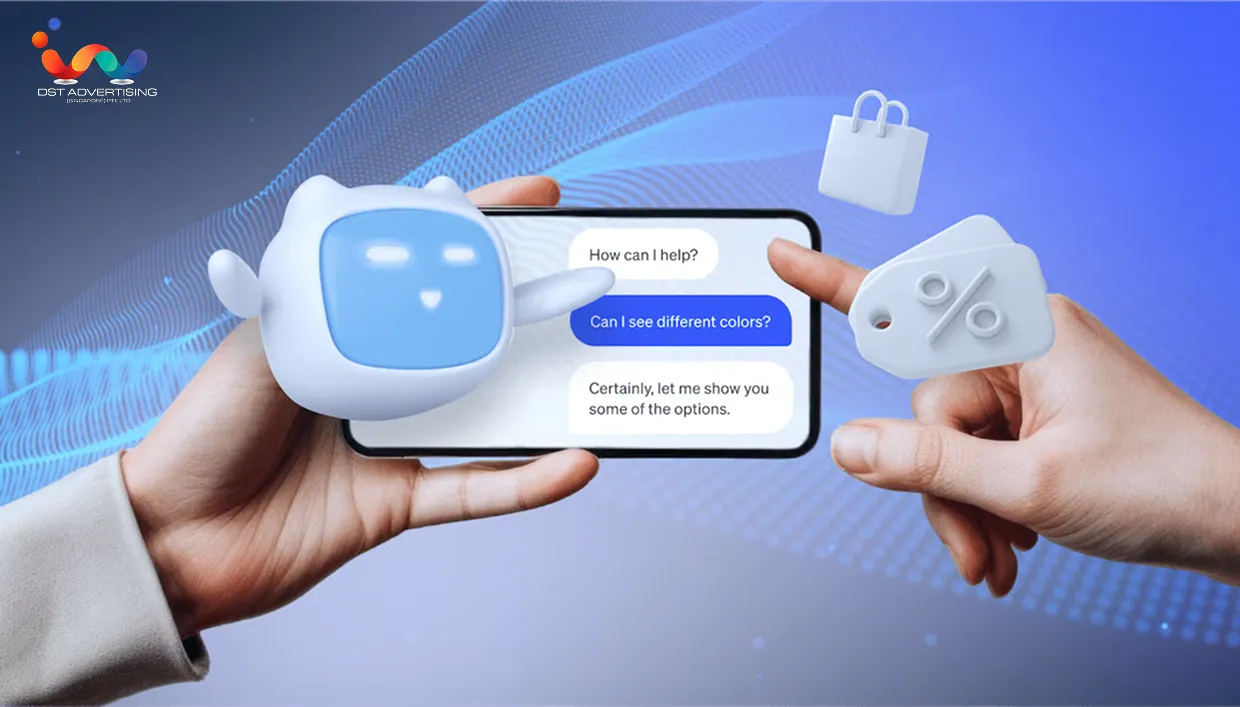
An AI chatbot for e-commerce can help automate many of these interactions. By using artificial intelligence to understand customer questions and provide relevant responses, businesses can offer faster support while reducing repetitive manual work.

From answering frequently asked questions to helping customers track orders and discover suitable products, AI chatbots can support multiple stages of the online shopping journey.

This guide explains how an AI chatbot can automate orders, FAQs, and product recommendations and how e-commerce businesses can use the technology effectively.

What Is an AI Chatbot for E-commerce?

An AI chatbot for e-commerce is a conversational tool designed to interact with online shoppers through channels such as:


  • E-commerce websites
  • Mobile apps
  • Social media messaging
  • WhatsApp and other messaging platforms
  • Customer support channels

Unlike basic rule-based chatbots that depend entirely on predefined buttons and scripts, AI-powered chatbots can use technologies such as natural language processing and generative AI to understand customer questions more flexibly.

For example, customers may ask:


  • “Where is my order?”
  • “Do you have this in a larger size?”
  • “Which product is best for sensitive skin?”
  • “How long does delivery take?”
  • “Can I return an item?”

An AI chatbot can help interpret these requests and provide relevant information based on the business’s approved knowledge sources, product catalogue, and connected systems.

Why E-commerce Businesses Are Using AI Chatbots

E-commerce stores often receive many of the same questions every day. As order volumes increase, customer service teams may spend more time answering repetitive enquiries.


An AI chatbot can help automate routine tasks such as:


  • Order status enquiries
  • Shipping questions
  • Return policy questions
  • Product availability
  • Product comparisons
  • Size or specification guidance
  • Basic troubleshooting
  • Product discovery

This allows human support teams to focus on more complex customer issues.

How AI Chatbots Automate Order Management

One of the most useful applications of an e-commerce chatbot is helping customers access order-related information.


Order Tracking


Customers frequently want to know where their orders are. Instead of requiring a support agent to manually check each order, a chatbot can guide customers through the order tracking process.

A typical workflow may look like this:


  1. The customer asks about their order.
  2. The chatbot requests the necessary information, such as an order number or verified account details.
  3. The chatbot retrieves available order information from an approved e-commerce or order management system.
  4. The customer receives an update about the order status.

Depending on the connected systems, the chatbot may provide information about:


  • Order confirmation
  • Processing status
  • Shipping status
  • Tracking details
  • Estimated delivery information

Order Changes and Cancellations


AI chatbots can also guide customers through requests involving:


  • Order cancellations
  • Address changes
  • Product changes
  • Duplicate order concerns

Not every request should be completed automatically. Businesses should establish clear rules for when the chatbot can handle a request and when it should transfer the conversation to a human support agent.


Return and Exchange Support


Returns and exchanges can generate significant customer support traffic.

A chatbot can help customers:


  • Check whether an item may be eligible for return
  • Understand the return policy
  • Find return instructions
  • Start an approved return workflow
  • Locate exchange information

Automating the initial stages of these processes can reduce repetitive support requests and make the experience more convenient for customers.

How AI Chatbots Automate Frequently Asked Questions

FAQs are one of the easiest and most valuable areas to automate.

Many e-commerce businesses repeatedly answer questions about:


  • Shipping times
  • Delivery locations
  • Product availability
  • Payment methods
  • Returns and refunds
  • Discounts
  • Store policies
  • Product usage
  • Account issues

An AI chatbot can provide answers instantly when it has access to accurate and well-maintained information.

For example, instead of forcing a customer to search through multiple website pages, they can simply ask:


“How long does standard delivery take?”

The chatbot can identify the question and provide the relevant answer from the store’s approved knowledge base.


Building a Better FAQ Knowledge Base


For reliable chatbot performance, businesses should organize and regularly update information related to:


  • Shipping policies
  • Return policies
  • Product details
  • Payment options
  • Warranty information
  • Promotions and terms
  • Customer service procedures

The chatbot should rely on trusted business information rather than generating unsupported answers.

How AI Chatbots Provide Product Recommendations

Product recommendations are another important use case for AI chatbots.


Traditional online shopping often requires customers to browse through categories, filters, and product pages. An AI chatbot can make this process more conversational.


For example, a customer might ask:

“I need a lightweight laptop bag for daily travel under $100.”


The chatbot can use relevant product catalogue information and available filters to identify suitable options.


Asking the Right Questions


A recommendation chatbot can also ask follow-up questions to better understand customer needs.

For example:


  • What is your budget?
  • Which size do you need?
  • What will you use the product for?
  • Do you have a preferred colour or style?
  • Which features are most important to you?

Based on the customer’s responses, the chatbot can narrow down relevant products.


Product Comparisons


Customers may also ask questions such as:


  • “What is the difference between these two products?”
  • “Which model is better for beginners?”
  • “Which option has more storage?”

An AI chatbot connected to accurate product information can summarize relevant differences and help customers make a more informed decision.


The goal should be to assist the customer rather than simply pushing the most expensive product.

Key Benefits of an AI Chatbot for E-commerce

1. Faster Customer Support


AI chatbots can provide immediate responses to common customer questions, reducing the time shoppers spend waiting for assistance.


2. 24/7 Availability


Customers shop at different times of the day. A chatbot can provide automated assistance outside normal business hours.


3. Reduced Repetitive Work


Support teams can spend less time answering the same basic questions and focus on more complex cases.


4. Improved Product Discovery


Conversational product recommendations can help shoppers find relevant products without manually searching through a large catalogue.


5. More Consistent Responses


A well-configured chatbot can provide consistent answers based on approved business information.


6. Support for Business Growth


As an online store receives more visitors and customer enquiries, automation can help manage a larger volume of routine interactions.

A Simple E-commerce AI Chatbot Workflow

A typical customer interaction may follow this process:


Customer Question → AI Chatbot → Knowledge Base or Business System → Response or Human Handoff


For example:

Customer: “Where is my order?”


Chatbot: Requests the information needed to identify the order.


Connected System: Provides the current order status.


Chatbot: Shares the available update with the customer.


If the request is unusual or cannot be resolved automatically, the chatbot can transfer the conversation to a human agent with the available context.

Best Practices for Implementing an AI Chatbot

Start With High-Volume Questions


Begin by identifying the questions your customer support team receives most often.

Good starting points include:


  • Order tracking
  • Shipping information
  • Returns
  • Payment questions
  • Product availability

Keep Product Data Accurate


Product recommendations are only as reliable as the information behind them.

Ensure your chatbot has access to updated information about:


  • Product names
  • Prices
  • Availability
  • Features
  • Sizes
  • Specifications
  • Compatibility

Create Clear Escalation Rules


Customers should be able to reach a human when necessary.

Escalate conversations involving:


  • Payment disputes
  • Complex order problems
  • Sensitive complaints
  • Fraud concerns
  • Issues the chatbot cannot confidently resolve

Protect Customer Information


Order and account automation may involve personal customer data. Businesses should use appropriate authentication, access controls, and privacy safeguards before exposing order information through a chatbot.


Monitor and Improve Performance


Review chatbot conversations regularly to identify:


  • Questions the chatbot cannot answer
  • Incorrect or unclear responses
  • Frequently requested information
  • Opportunities to improve automation

Continuous improvement can make the chatbot more useful over time.

How to Choose the Right AI Chatbot for Your Online Store

Before selecting an AI chatbot platform, consider whether it can support your existing e-commerce workflow.

Important features may include:


  • E-commerce platform integration
  • Product catalogue access
  • Order management integration
  • Knowledge base support
  • AI-powered natural language understanding
  • Product recommendation capabilities
  • Human agent handoff
  • Analytics and reporting
  • Multi-channel support
  • Security and access controls

The best solution depends on your store’s size, product catalogue, customer service needs, and existing technology.

Common Mistakes to Avoid

Using Outdated Information


An AI chatbot can provide poor customer experiences if it uses outdated shipping policies, product information, or prices.


Automating Every Interaction


Not every customer issue should be handled entirely by AI. Complex or sensitive situations often require human assistance.


Ignoring the Customer Journey


The chatbot should make shopping easier, not create another obstacle between the customer and support.

Avoid unnecessary questions and long conversation flows.


Recommending Products Without Enough Context


Product recommendations should be based on relevant customer needs, preferences, and accurate product information whenever possible.

The Future of AI Chatbots in E-commerce

AI chatbots are evolving from simple question-and-answer tools into broader shopping assistants.


As AI and business integrations continue to improve, chatbots may become increasingly capable of helping customers:


  • Discover products
  • Compare options
  • Track orders
  • Navigate returns
  • Receive personalized assistance
  • Complete routine shopping tasks

For e-commerce businesses, the biggest opportunity is not simply to replace customer service with automation. It is to combine AI with human support to create a faster and more convenient shopping experience.

Final Thoughts

An AI chatbot for e-commerce can help automate some of the most time-consuming parts of customer communication, including order enquiries, FAQs, returns support, and product recommendations.


When connected to accurate product data, approved business information, and relevant e-commerce systems, a chatbot can provide faster assistance while reducing repetitive workloads for customer service teams.


The most effective strategy is to start with high-volume, low-complexity interactions, establish clear rules for human handoff, and continuously improve the chatbot based on real customer conversations.


For modern e-commerce businesses, AI chatbots can become more than a support tool. When implemented effectively, they can help customers find the right products, get answers faster, and enjoy a smoother shopping experience.

Latest Post

Our Blog Stories

Businesses of every size are transforming the way they connect with customers through AiChat. From instant support to intelligent sales funnels here’s how our clients describe their success.

AI Chatbot

AI Chatbot for E-commerce: How to Automate Orders, FAQs and Product Recommendations

Online shoppers expect fast answers, convenient support, and personalized shopping experiences. However, managing a growing number of customer questions about products, orders, shipping, returns, and availability can place significant pressure on an e-commerce team.

An AI chatbot for e-commerce can help automate many of these interactions. By using artificial intelligence to understand customer questions and provide relevant responses, businesses can offer faster support while reducing repetitive manual work.

From answering frequently asked questions to helping customers track orders and discover suitable products, AI chatbots can support multiple stages of the online shopping journey.

This guide explains how an AI chatbot can automate orders, FAQs, and product recommendations and how e-commerce businesses can use the technology effectively.

AI Solutions Singapore

PSG Grant for AI Solutions in Singapore: A Guide for SMEs

Artificial intelligence is becoming increasingly accessible to small and medium-sized enterprises (SMEs) in Singapore. From AI-powered customer service and marketing tools to automation, analytics, document processing, and sales solutions, businesses can now adopt technologies that were once available mainly to larger organisations.

One important source of support is the Productivity Solutions Grant (PSG). The grant helps eligible Singapore businesses adopt pre-approved IT solutions and equipment that improve productivity and automate business processes. As Singapore expands support for digital and AI-enabled solutions, SMEs may find more opportunities to adopt AI tools with government support.

This guide explains how the PSG works, who may be eligible, how AI solutions fit into the programme, and what SMEs should consider before applying.

Customer Support Automation

What Is an Omnichannel AI Chatbot? Benefits for Modern Businesses

Modern customers expect quick, convenient, and consistent communication with businesses. Whether they contact a company through a website, Facebook Messenger, WhatsApp, Instagram, or another digital channel, they want fast answers without having to repeat themselves.

This is where an omnichannel AI chatbot can make a major difference.

Unlike a traditional chatbot that operates on only one platform, an omnichannel AI chatbot can provide automated and connected customer support across multiple communication channels. It helps businesses deliver a smoother customer experience, improve response times, reduce support workloads, and stay available around the clock.

In this article, we will explain what an omnichannel AI chatbot is, how it works, and the key benefits it offers modern businesses.

Ready To Transform Your Business Today?

Book your free demo with DST Advertising Singapore.