Modern customers expect quick, convenient, and consistent communication with businesses. Whether they contact a company through a website, Facebook Messenger, WhatsApp, Instagram, or another digital channel, they want fast answers without having to repeat themselves.
This is where an omnichannel AI chatbot can make a major difference.
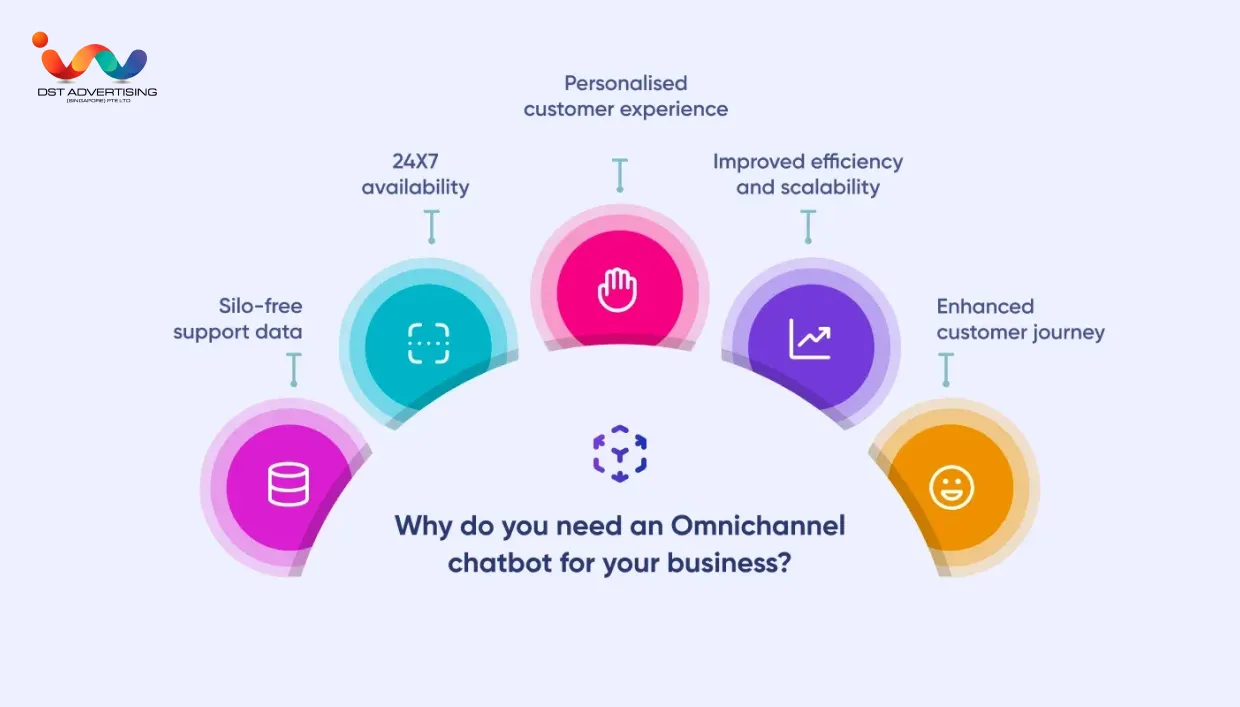
Unlike a traditional chatbot that operates on only one platform, an omnichannel AI chatbot can provide automated and connected customer support across multiple communication channels. It helps businesses deliver a smoother customer experience, improve response times, reduce support workloads, and stay available around the clock.
In this article, we will explain what an omnichannel AI chatbot is, how it works, and the key benefits it offers modern businesses.
How Does an Omnichannel AI Chatbot Work?
An omnichannel AI chatbot uses artificial intelligence to understand customer questions and provide relevant responses across different communication platforms.
Depending on the system, the chatbot may use technologies such as:
- Natural language processing (NLP)
- Machine learning
- Generative AI
- Knowledge bases
- CRM integrations
- Customer data platforms
- Workflow automation
When a customer sends a message, the chatbot analyzes the request and searches for the most relevant information or response.
For example, a customer may ask:
“Where is my order?”
The AI chatbot can potentially access connected order information and provide an update. If the issue requires human assistance, the conversation can be transferred to a customer support representative.
Because the chatbot operates across multiple channels, businesses can create a more unified support system rather than managing completely separate conversations on every platform.
Key Benefits of an Omnichannel AI Chatbot
1. Provides a Better Customer Experience
Customers do not always interact with a business through a single channel.
One customer may prefer live chat, while another prefers WhatsApp or social media messaging. An omnichannel AI chatbot allows businesses to meet customers on the platforms they already use.
More importantly, connected conversations can reduce the frustration of repeating the same information multiple times.
This creates a smoother and more convenient customer experience.
2. Delivers Faster Responses
Customers increasingly expect quick answers, especially when they have questions about products, services, orders, appointments, or account information.
An AI chatbot can instantly respond to common questions such as:
- What are your business hours?
- Where is my order?
- What services do you offer?
- How much does this product cost?
- How can I book an appointment?
- What is your return policy?
Instead of waiting for a support agent, customers can receive immediate assistance.
Faster responses can improve customer satisfaction while reducing the pressure on support teams.
3. Provides 24/7 Customer Support
Human support teams cannot always be available around the clock. However, customers may visit your website or send messages outside normal business hours.
An omnichannel AI chatbot can continue answering common questions 24/7.
This is particularly valuable for businesses that:
- Serve customers in multiple time zones
- Operate internationally
- Receive a high volume of customer inquiries
- Sell products online
- Offer digital services
When human assistance is required, the chatbot can collect relevant information and direct the customer to the appropriate team.
4. Creates a Consistent Brand Experience
Consistency is important when communicating with customers across multiple channels.
Without an integrated system, customers may receive different answers depending on whether they contact your business through your website, social media, or another messaging platform.
An omnichannel chatbot can help businesses maintain:
- Consistent messaging
- Accurate information
- Standardized responses
- Unified customer service workflows
- A recognizable brand voice
This can help create a more professional and reliable customer experience.
5. Reduces Customer Support Workload
Customer service teams often spend significant time answering repetitive questions.
An omnichannel AI chatbot can automate many routine interactions, allowing employees to focus on more complex tasks.
For example, the chatbot can handle:
- Frequently asked questions
- Product information
- Order updates
- Appointment scheduling
- Lead qualification
- Basic troubleshooting
- Account-related questions
By automating repetitive conversations, businesses may improve efficiency without requiring every customer inquiry to be handled manually.
6. Helps Generate and Qualify Leads
An omnichannel AI chatbot can do more than provide customer support. It can also help businesses capture and qualify potential leads.
For example, when a visitor lands on a website, the chatbot can ask questions such as:
- What service are you interested in?
- What is your budget?
- When are you planning to make a purchase?
- What challenges are you trying to solve?
Based on the answers, the chatbot can collect lead information and direct qualified prospects to the sales team.
This allows businesses to engage potential customers immediately instead of waiting for them to complete a contact form or send an email.
7. Improves Personalization
When integrated with customer data and business systems, an AI chatbot can provide more relevant interactions.
For example, instead of giving every customer the same generic response, the system may use available information to provide context-aware assistance.
Personalized interactions can include:
- Product recommendations
- Relevant service information
- Order updates
- Appointment reminders
- Follow-up messages
- Customized support
The more effectively customer interactions are connected, the easier it becomes to create a smoother and more relevant experience.
8. Helps Businesses Scale Customer Communication
As a business grows, the number of customer messages usually grows as well.
Hiring additional support staff for every increase in inquiries can become expensive and difficult to manage.
An omnichannel AI chatbot can help businesses handle a larger volume of routine conversations while human teams focus on situations that require expertise, empathy, or decision-making.
This makes AI chatbots particularly useful for growing businesses that want to scale customer communication efficiently.
9. Centralizes Customer Conversations
Managing messages across multiple platforms can be challenging.
A business may receive inquiries from:
- Website visitors
- Social media users
- Messaging apps
- Mobile app users
- Existing customers
Without an integrated approach, support teams may need to switch constantly between platforms.
An omnichannel chatbot system can help centralize these interactions, making it easier to manage customer communication and maintain better visibility into conversations.
10. Supports Better Business Insights
Customer conversations contain valuable information about what people want, what problems they experience, and what questions they frequently ask.
An omnichannel AI chatbot can help businesses identify patterns such as:
- Common customer concerns
- Frequently asked questions
- Popular products or services
- Common support issues
- Customer preferences
- Potential gaps in the customer journey
These insights can help businesses improve their products, services, website content, and customer support strategies.
What Features Should You Look for in an Omnichannel AI Chatbot?
Not every AI chatbot platform offers the same capabilities. When choosing a solution, businesses should consider features that support their specific goals.
Important features may include:
Multi-Channel Integration
The chatbot should support the channels your customers use most, such as your website, messaging platforms, social media, or mobile apps.
AI and Natural Language Understanding
A strong AI chatbot should understand different ways customers ask questions rather than relying only on exact keywords.
Human Agent Handoff
Some issues require human assistance. The chatbot should be able to transfer the conversation smoothly to the appropriate support representative.
CRM Integration
Integration with CRM software can help businesses manage customer information and create more connected interactions.
Analytics and Reporting
Analytics can help businesses understand:
- Chat volume
- Common customer questions
- Resolution rates
- Customer engagement
- Lead generation performance
Customization
Businesses should be able to customize the chatbot’s:
- Brand voice
- Conversation flows
- Knowledge base
- Responses
- Automation rules
How to Implement an Omnichannel AI Chatbot
Implementing an omnichannel AI chatbot does not simply mean adding a chatbot to every available platform. A successful strategy should focus on the customer journey.
Step 1: Identify Your Main Customer Channels
Start by identifying where your customers currently contact you.
These may include:
- Your website
- WhatsApp
- Facebook Messenger
- Instagram
- Mobile apps
- Email
Focus first on the channels that generate the most valuable customer interactions.
Step 2: Identify Common Customer Questions
Review customer support tickets, emails, messages, and live chat conversations.
Look for repetitive questions that can potentially be automated.
Step 3: Build a Reliable Knowledge Base
An AI chatbot is only as useful as the information it can access.
Create clear and accurate content about:
- Products and services
- Pricing
- Policies
- Shipping
- Returns
- Troubleshooting
- Business information
Regularly update this information to reduce inaccurate or outdated responses.
Step 4: Connect Important Business Systems
Depending on your business needs, you may want to connect the chatbot with systems such as:
- CRM software
- E-commerce platforms
- Appointment booking tools
- Customer support software
- Internal knowledge bases
These integrations can help the chatbot provide more useful and context-aware assistance.
Step 5: Create a Clear Human Handoff Process
AI cannot solve every customer problem.
Create clear rules for when conversations should be transferred to a human agent. For example, escalation may be necessary for:
- Complex technical issues
- Sensitive complaints
- Billing disputes
- High-value sales opportunities
- Requests requiring human judgment
A smooth handoff is essential for maintaining a positive customer experience.
Step 6: Monitor and Improve Performance
An omnichannel AI chatbot should be continuously improved.
Monitor customer interactions to identify:
- Questions the chatbot cannot answer
- Confusing responses
- Common customer problems
- Opportunities for new automation
Regular improvements can make the chatbot more accurate and valuable over time.
Challenges Businesses Should Consider
Although omnichannel AI chatbots offer many benefits, successful implementation requires careful planning.
Maintaining Accurate Information
Outdated information can lead to incorrect responses. Businesses should regularly review and update chatbot knowledge sources.
Protecting Customer Data
Businesses should carefully consider privacy, security, access controls, and applicable data protection requirements when connecting customer information to AI systems.
Avoiding Over-Automation
Not every interaction should be automated. Customers may become frustrated if they cannot reach a human when dealing with a complex or sensitive issue.
The best approach is often a combination of AI automation and human support.
Conclusion
An omnichannel AI chatbot allows businesses to communicate with customers across multiple connected channels while improving consistency, efficiency, and accessibility.
From providing 24/7 support and answering common questions to qualifying leads and centralizing customer conversations, omnichannel AI chatbots can offer significant benefits for modern businesses.
However, the most effective chatbot strategy combines AI automation with human support. Businesses should focus on solving real customer problems, maintaining accurate information, and creating seamless experiences across every important communication channel.
As customer expectations continue to evolve, an omnichannel AI chatbot can become an important tool for businesses looking to improve customer engagement, streamline support operations, and scale their communication more effectively.