DST ADVERTISING (SINGAPORE) PTE LTD

AI Chatbot for Business: How Singapore SMEs Can Automate Customer Support

Singapore’s small and medium-sized enterprises (SMEs) are increasingly turning to artificial intelligence (AI) to improve efficiency, reduce operational costs, and deliver better customer experiences. One of the most practical AI solutions for businesses today is an AI chatbot for customer support.

An AI-powered chatbot can answer customer questions, provide instant assistance, collect leads, schedule appointments, and handle repetitive support requests without requiring employees to respond to every message manually.

For Singapore SMEs managing growing customer demands with limited resources, AI chatbots can provide a scalable way to automate customer support while keeping service available around the clock.

What Is an AI Chatbot for Business?

An AI chatbot is software that uses artificial intelligence and natural language processing to communicate with customers through websites, messaging platforms, or other digital channels.


Unlike traditional rule-based chatbots that rely on predefined responses, modern AI chatbots can understand customer questions and generate relevant answers based on their training, business information, and available knowledge sources.


For example, a Singapore-based service business could use an AI chatbot to answer questions such as:


  • What are your business hours?
  • How much does your service cost?
  • How can I book an appointment?
  • Where are you located?
  • What payment methods do you accept?
  • How long does delivery take?
  • Can I speak to a human representative?

This allows employees to focus on more complex customer requests while the chatbot handles common questions automatically.

Why Singapore SMEs Should Consider AI Chatbots

Singapore has a highly digital business environment, and customers increasingly expect fast responses through websites, messaging apps, and other online channels. For SMEs, responding manually to every enquiry can become time-consuming as customer volume increases.


An AI chatbot can help solve this problem by providing immediate responses at any time.

1. Provide 24/7 Customer Support


One of the biggest advantages of an AI chatbot is its availability.


Customers do not always contact businesses during working hours. Someone may visit your website late at night and want to know about your services, pricing, or availability.


Instead of waiting until the next business day, customers can receive an instant response from an AI chatbot.


This can improve the overall customer experience and prevent potential leads from leaving your website without taking action.

2. Reduce Repetitive Support Tasks


Customer service teams often spend significant amounts of time answering the same questions.


For example, an e-commerce business may repeatedly receive questions about shipping, returns, payment methods, and product availability.


An AI chatbot can automatically handle many of these repetitive enquiries. This allows employees to spend more time on complicated problems that require human judgment.

3. Generate and Qualify Leads


AI chatbots are not limited to customer support. They can also help businesses generate leads.


A chatbot can ask visitors questions such as:


  • What service are you interested in?
  • What is your budget?
  • When would you like to get started?
  • What type of business do you operate?
  • How can we help you?

Based on the answers, the chatbot can identify potential customers and collect their contact details.


For Singapore SMEs, this can create a more efficient sales funnel by connecting qualified prospects with the appropriate salesperson.

4. Improve Response Times


Customers generally do not want to wait hours for a response to a simple question.


An AI chatbot can respond within seconds, making communication significantly faster.


Faster responses can be particularly valuable for businesses operating in competitive industries where customers may contact several companies before making a purchasing decision.

5. Lower Customer Support Costs


Hiring additional customer service employees can increase salary, training, and operational costs.


An AI chatbot can handle a large number of conversations simultaneously without requiring additional staff for every interaction.


This does not necessarily mean replacing human employees. Instead, SMEs can use AI to handle routine conversations and allow their support teams to concentrate on higher-value interactions.

How AI Chatbots Automate Customer Support

A typical AI chatbot implementation can automate several stages of the customer support process.

Step 1: Customer Starts a Conversation


A visitor opens the chatbot on the company website and asks a question.

For example:

Customer: “Do you provide web development services for Singapore businesses?”

Step 2: AI Understands the Question


The chatbot analyzes the customer’s message and identifies the intent behind the question.

It can then retrieve relevant information from the business’s knowledge base or predefined resources.

Step 3: Chatbot Provides an Answer


The chatbot responds with relevant information instead of requiring a customer service employee to answer manually.

Step 4: Lead or Support Request Is Collected


If the customer wants to take the next step, the chatbot can collect information such as their name, email address, phone number, or requirements.

Step 5: Human Handoff When Necessary


If the question is complex or requires human intervention, the chatbot can transfer the conversation to a customer service representative.


This combination of AI automation and human support can create a more efficient customer service system.

AI Chatbot vs Traditional Customer Support

Traditional customer support depends heavily on employees being available to answer customer questions.


AI chatbots can complement human support by automating routine interactions.

Feature

Traditional Support

AI Chatbot

Availability

Business hours

24/7

Response time

Minutes to hours

Usually immediate

Multiple conversations

Limited by staff

Can handle many simultaneously

Repetitive questions

Manual

Automated

Lead qualification

Staff-dependent

Can be automated

Complex issues

Excellent

Human handoff recommended

The best approach for many Singapore SMEs is not to choose between AI and human support, but to combine both.

Where Can Singapore SMEs Use AI Chatbots?

AI chatbots can be useful across many industries.

E-Commerce


Online stores can use chatbots to answer product questions, provide shipping information, recommend products, and assist with order-related enquiries.

Healthcare and Clinics

Clinics can use chatbots to provide general information, answer frequently asked questions, and help customers with appointment enquiries while directing sensitive matters to appropriate staff.

Real Estate


Property businesses can use AI chatbots to answer questions about listings, collect buyer requirements, and schedule consultations.

Professional Services


Accounting, marketing, legal, consulting, and other professional service businesses can use chatbots to qualify leads and answer common service-related questions.

Education and Training


Training providers can use chatbots to provide course information, answer enrolment questions, and collect student enquiries.

How to Implement an AI Chatbot for Your SME

Implementing an AI chatbot does not have to be complicated. A practical approach involves several key steps.

Identify Common Customer Questions


Start by reviewing customer emails, live chats, phone enquiries, and frequently asked questions.

Identify questions that are repetitive and can be answered using existing business information.

Create a Reliable Knowledge Base


Your chatbot needs accurate information about your company.

This may include:


  • Products and services
  • Pricing information
  • Business hours
  • FAQs
  • Policies
  • Contact information
  • Booking procedures
  • Delivery information

Keeping this information accurate is essential because incorrect chatbot responses can negatively affect customer trust.

Define Human Handoff Rules


Not every conversation should be automated.

Businesses should establish clear situations where the chatbot transfers a conversation to a human representative. These may include complaints, complex technical issues, sensitive enquiries, or requests involving account-specific information.

Connect the Chatbot With Business Systems


Depending on the business, an AI chatbot can potentially connect with CRM systems, appointment scheduling platforms, customer databases, e-commerce systems, and other business tools.

These integrations can make automation more useful by allowing the chatbot to do more than simply answer questions.

Monitor and Improve Performance


AI chatbot implementation should not be considered a one-time project.

Businesses should monitor conversations, identify unanswered questions, review incorrect responses, and continuously update the chatbot’s knowledge.

Important Considerations Before Using an AI Chatbot

Although AI chatbots offer significant benefits, Singapore SMEs should consider several factors before implementation.

Accuracy


The chatbot should provide reliable information. Businesses should regularly review its responses and knowledge sources.

Data Privacy


Customer information should be handled responsibly. Businesses should ensure their chatbot implementation follows applicable privacy and data protection requirements.

Security


Businesses should consider how customer information is stored, accessed, and transmitted, particularly when the chatbot is connected to internal systems.

Human Support


AI should complement customer service rather than eliminate human interaction completely. Customers should have a clear way to contact a human when necessary.

How Much Does an AI Chatbot Cost for a Singapore SME?

The cost of implementing an AI chatbot can vary significantly depending on the business’s requirements.


A basic chatbot with FAQ functionality may be relatively affordable, while a custom AI chatbot connected to CRM, booking systems, e-commerce platforms, and other business applications can require a larger investment.


Factors that influence the cost include:


  • Chatbot complexity
  • Number of integrations
  • AI model and platform used
  • Number of conversations
  • Custom development requirements
  • Maintenance and optimisation
  • Security requirements

SMEs should evaluate the potential return on investment rather than choosing a chatbot solely based on its initial price.

Benefits of AI Chatbot Automation for Singapore SMEs

When implemented correctly, an AI chatbot can provide several business benefits:


  • 24/7 customer assistance
  • Faster response times
  • Reduced repetitive workloads
  • Improved lead generation
  • Better customer engagement
  • Scalable customer support
  • Potential reduction in support costs
  • More efficient use of employee time

The biggest advantage is often the ability to scale customer support without increasing the workload at the same rate.

The Future of AI Customer Support in Singapore

AI-powered customer support is likely to become increasingly common as businesses adopt more advanced automation technologies.


Future AI chatbots will continue moving beyond simple question-and-answer functionality. They can increasingly become intelligent customer service assistants capable of understanding context, assisting with workflows, qualifying leads, and connecting customers with the right human employee when necessary.


For Singapore SMEs, adopting AI early can provide an opportunity to improve customer experience while creating more efficient internal operations.

Conclusion

An AI chatbot for business can be a practical solution for Singapore SMEs looking to automate customer support, improve response times, and handle growing customer enquiries more efficiently.


From answering frequently asked questions and generating leads to scheduling appointments and supporting human agents, AI chatbots can automate many repetitive tasks while allowing employees to focus on more valuable customer interactions.


The key is to implement AI strategically. A successful chatbot should be trained on accurate business information, connected to relevant systems, monitored regularly, and designed with a clear human handoff process.


For Singapore SMEs, the goal should not simply be to replace human customer support with AI. Instead, businesses should use AI to make customer support faster, smarter, and more scalable.

Latest Post

Our Blog Stories

Businesses of every size are transforming the way they connect with customers through AiChat. From instant support to intelligent sales funnels here’s how our clients describe their success.

AI Chatbot

AI Chatbot for E-commerce: How to Automate Orders, FAQs and Product Recommendations

Online shoppers expect fast answers, convenient support, and personalized shopping experiences. However, managing a growing number of customer questions about products, orders, shipping, returns, and availability can place significant pressure on an e-commerce team.

An AI chatbot for e-commerce can help automate many of these interactions. By using artificial intelligence to understand customer questions and provide relevant responses, businesses can offer faster support while reducing repetitive manual work.

From answering frequently asked questions to helping customers track orders and discover suitable products, AI chatbots can support multiple stages of the online shopping journey.

This guide explains how an AI chatbot can automate orders, FAQs, and product recommendations and how e-commerce businesses can use the technology effectively.

AI Solutions Singapore

PSG Grant for AI Solutions in Singapore: A Guide for SMEs

Artificial intelligence is becoming increasingly accessible to small and medium-sized enterprises (SMEs) in Singapore. From AI-powered customer service and marketing tools to automation, analytics, document processing, and sales solutions, businesses can now adopt technologies that were once available mainly to larger organisations.
One important source of support is the Productivity Solutions Grant (PSG). The grant helps eligible Singapore businesses adopt pre-approved IT solutions and equipment that improve productivity and automate business processes. As Singapore expands support for digital and AI-enabled solutions, SMEs may find more opportunities to adopt AI tools with government support.

This guide explains how the PSG works, who may be eligible, how AI solutions fit into the programme, and what SMEs should consider before applying.

Customer Support Automation

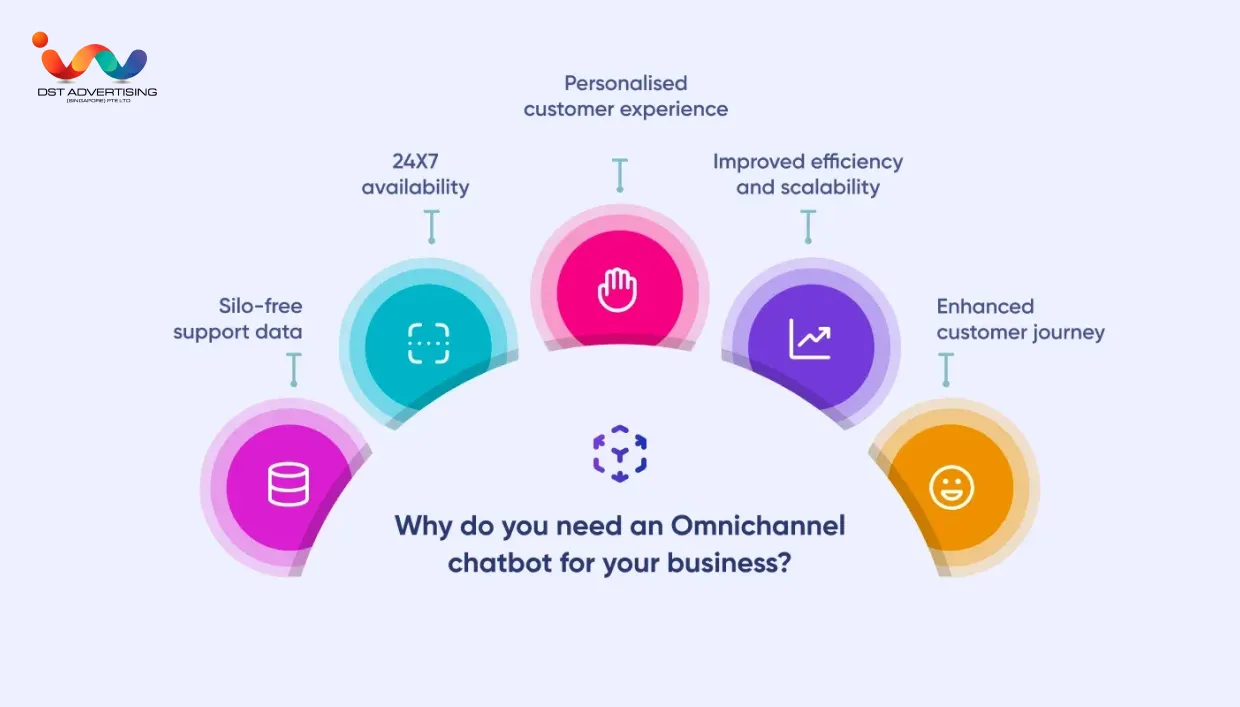
What Is an Omnichannel AI Chatbot? Benefits for Modern Businesses

Modern customers expect quick, convenient, and consistent communication with businesses. Whether they contact a company through a website, Facebook Messenger, WhatsApp, Instagram, or another digital channel, they want fast answers without having to repeat themselves.
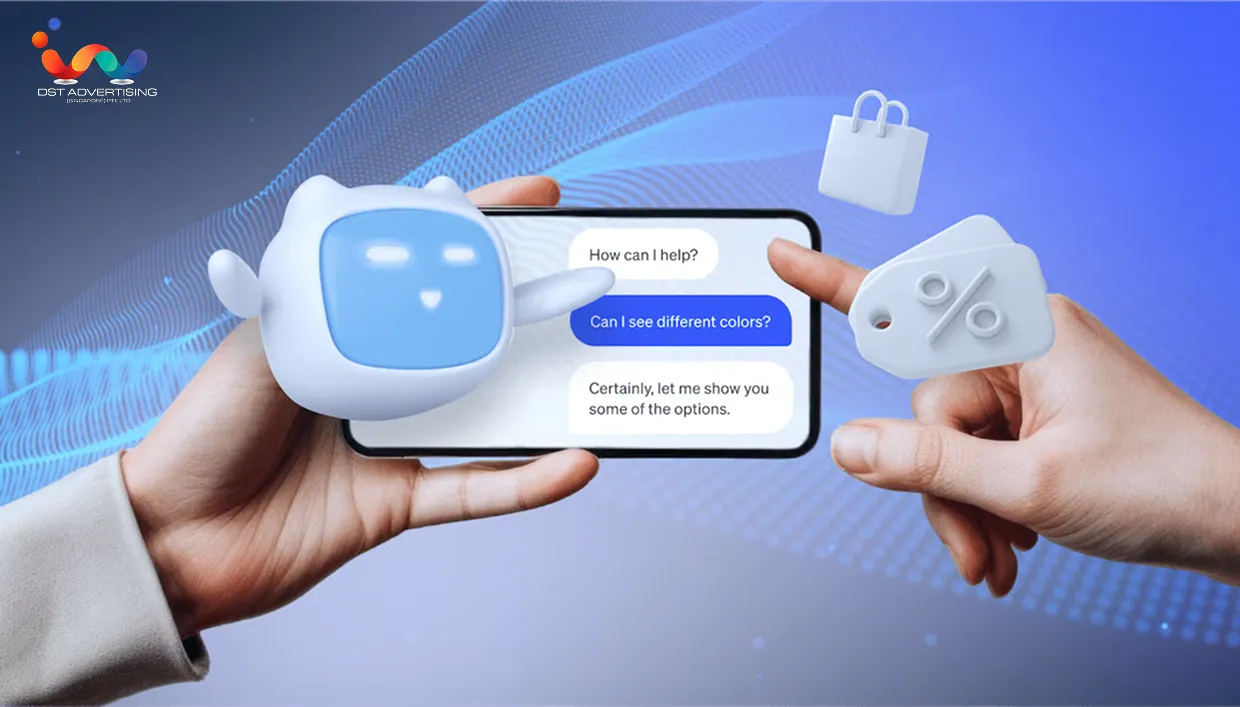
This is where an omnichannel AI chatbot can make a major difference.

Unlike a traditional chatbot that operates on only one platform, an omnichannel AI chatbot can provide automated and connected customer support across multiple communication channels. It helps businesses deliver a smoother customer experience, improve response times, reduce support workloads, and stay available around the clock.

In this article, we will explain what an omnichannel AI chatbot is, how it works, and the key benefits it offers modern businesses.

Ready To Transform Your Business Today?

Book your free demo with DST Advertising Singapore.