DST ADVERTISING (SINGAPORE) PTE LTD

What Is Artificial Intelligence (AI)?

Artificial Intelligence (AI) is one of the most talked-about technologies of the 21st century but what exactly is it, and why is it transforming how businesses operate today?

From chatbots and image recognition to predictive analytics and autonomous vehicles, AI is everywhere. In this post, we’ll break down what AI really means, how it works, the types of AI you’ll encounter, and how Singapore businesses can tap into AI’s potential through the Productivity Solutions Grant (PSG).

Definition: What Is Artificial Intelligence?

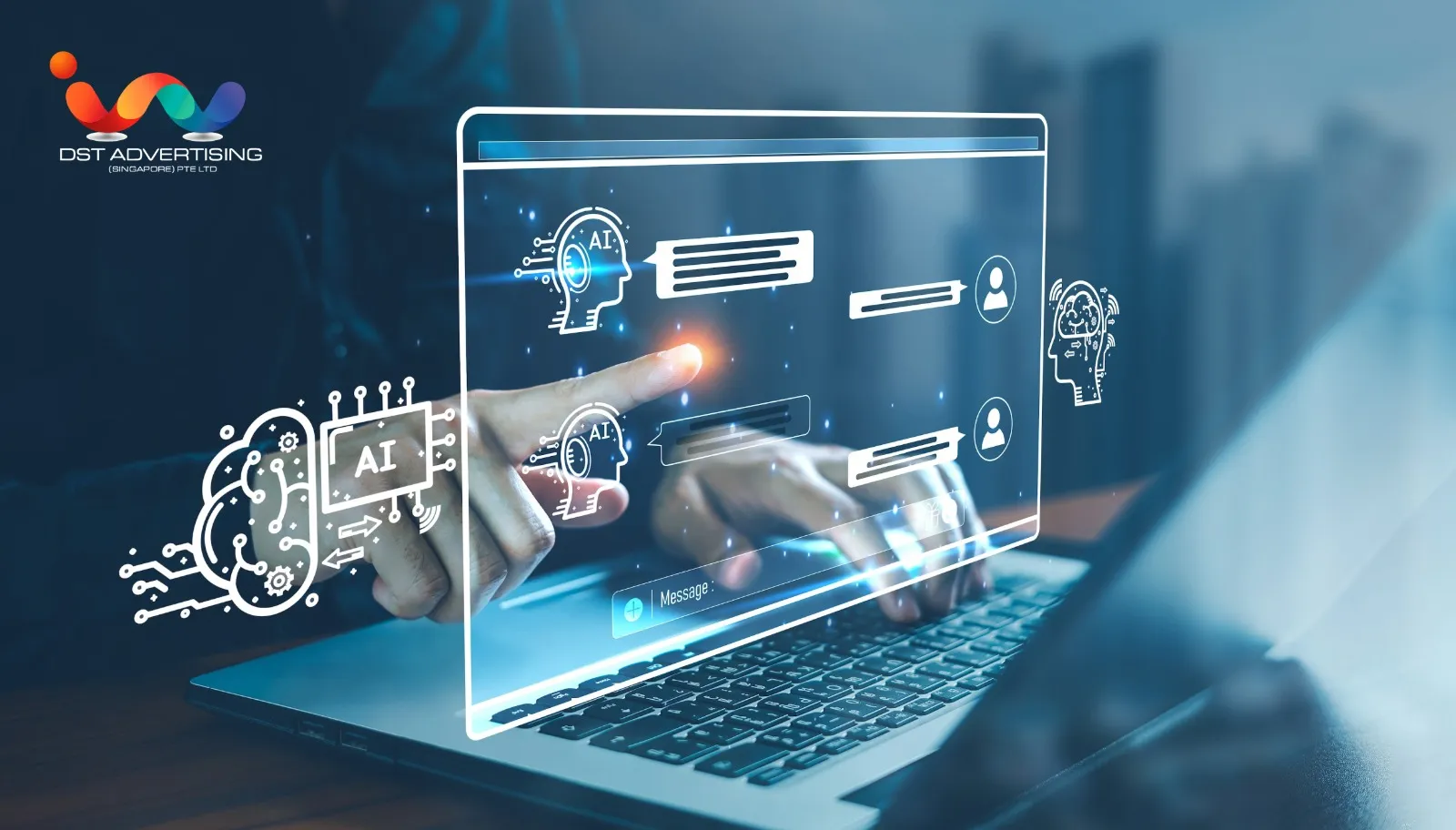
Artificial Intelligence (AI) refers to computer systems designed to perform tasks that normally require human intelligence. These tasks include learning, reasoning, problem-solving, language understanding, and perception.

In simple terms, AI enables machines to “think” and “learn” from data, mimicking the cognitive functions of humans  but often doing so faster, more accurately, and at larger scales.

How Does AI Work?

AI operates by combining data, algorithms, and computing power to generate insights or automate decisions. Here’s a quick breakdown:


  1. Data Collection – AI systems rely on large amounts of data such as text, images, audio, or sensor readings.


  2. Machine Learning – Algorithms analyze that data and learn patterns, allowing AI to make predictions or recommendations.


  3. Model Training – The more data an AI model processes, the better it becomes at its task.


  4. Automation and Output – Once trained, the AI system can act independently  whether it’s answering questions, detecting objects, or generating new ideas.

This ability to continuously learn and improve is what makes AI so powerful and transformative.

Types of Artificial Intelligence :

AI isn’t a single technology  it’s a broad field with multiple forms and applications. The main categories include:

1. Narrow AI (Weak AI)

This is the most common type of AI today. It’s designed to perform a specific task like facial recognition, translation, or customer support chatbots. Narrow AI can outperform humans in its specialty, but it doesn’t possess general intelligence.

2. General AI (Strong AI)

This theoretical type of AI would have human like intelligence  the ability to understand, learn, and apply knowledge across different domains. General AI doesn’t yet exist, but it’s the long-term goal for many researchers.

3. Machine Learning (ML)

A subset of AI where algorithms automatically learn and improve from experience without being explicitly programmed. It powers applications like recommendation engines and fraud detection.

4. Deep Learning

An advanced branch of machine learning using neural networks with many layers. Deep learning drives technologies like voice assistants, image recognition, and generative AI.

Everyday Examples of AI

You interact with AI every day  often without realizing it. Here are some examples:

  • Voice assistants like Siri or Alexa

  • Recommendation systems on Netflix, YouTube, and Spotify

  • Predictive text and chatbots

  • Smart home devices that learn your habits

  • AI-driven analytics that optimize marketing and operations

In businesses, AI is used to streamline workflows, improve customer engagement, and uncover hidden insights from data.

Benefits of AI for Businesses

Adopting AI can unlock major advantages for organizations of all sizes:


  • Increased Efficiency: Automate repetitive tasks to save time and reduce errors.


  • Smarter Decision-Making: Gain data driven insights to guide strategy.


  • Personalized Marketing: Target the right audience with tailored campaigns.


  • Cost Reduction: Optimize operations and resource usage.


  • Innovation and Growth: Create new products and services faster.

Whether you’re in retail, manufacturing, or professional services, AI can help you stay competitive in a digital economy.

AI Adoption in Singapore: The PSG Grant

Singapore is actively encouraging businesses to embrace AI responsibly and effectively. One of the key support schemes is the Productivity Solutions Grant (PSG)  a government initiative that helps local SMEs adopt technology solutions, including AI and automation tools.

With the PSG, eligible businesses can receive financial support to implement AI solutions that enhance productivity, efficiency, and long-term sustainability.

If you’re considering integrating AI into your business operations, explore approved AI solutions and professional guidance through:
 DST Advertising – 4U DST AI

Conclusion

So, what is artificial intelligence? It’s more than just a buzzword, it’s the next frontier of digital transformation. AI is reshaping industries, enhancing human capabilities, and redefining how we solve problems.

By understanding AI’s core principles and leveraging support such as the PSG grant, Singapore businesses can adopt smarter, more efficient, and future-ready solutions.

The future of AI isn’t about replacing humans, it’s about empowering us to achieve more with intelligent technology.

Latest Post

Our Blog Stories

Businesses of every size are transforming the way they connect with customers through AiChat. From instant support to intelligent sales funnels here’s how our clients describe their success.

Business Automation Tools

Traditional ERP vs AI-Driven ERP: Why DST ERP Stands Out

Enterprise Resource Planning (ERP) systems have long been the backbone of business operations. However, as data volumes grow and market conditions change faster than ever, traditional ERP systems are struggling to keep up. This has led to the rise of AI-driven ERP solutions, which go beyond record keeping to deliver intelligence, automation, and predictive insights.
In this comparison of Traditional ERP vs AI Driven ERP, we explore the key differences and explain why DST ERP stands out as a future ready, intelligent ERP platform.

Business Automation Tools

How DST ERP’s AI Assistant Improves Productivity and Decision Making

In today’s fast paced business environment, organizations need more than just software they need intelligent systems that help teams work faster, smarter, and with confidence. This is where DST ERP’s AI Assistant stands out. By combining automation, real time insights, and data-driven intelligence, DST ERP empowers businesses to significantly improve productivity and decision making across departments.

This article explores how the AI Assistant in DST ERP transforms everyday operations and delivers measurable business value.

Business Automation Tools

Why Businesses Need AI Powered ERP Systems in 2026

As we move deeper into the digital first era, traditional ERP systems are no longer enough to keep businesses competitive. In 2026, organizations face growing data volumes, rising customer expectations, and increasing operational complexity. To keep up, businesses are turning to AI powered ERP systems as a smarter, more adaptive solution.
By combining artificial intelligence with enterprise resource planning, AI driven ERP platforms help businesses automate processes, predict outcomes, and make data backed decisions in real time. Here’s why AI powered ERP systems are no longer optional in 2026 they’re essential.

Ready To Transform Your Business Today?

Book your free demo with DST Advertising Singapore.